
Sandoz Studies, Volume 1: Women in the Writings of Mari Sandoz
Edited and with an introduction by Renée M. Laegreid and Shannon D. Smith; Foreword by John Wunder
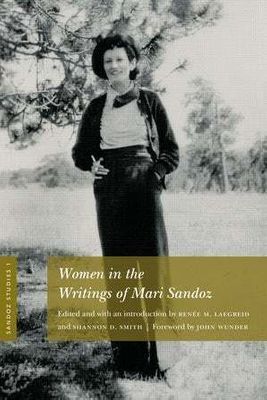
Women in the Writings of Mari Sandoz is the first volume of the Sandoz Studies series, a collection of thematically grouped essays that feature writing by and about Mari Sandoz and her work.
When Sandoz wrote about the women she knew and studied, she did not shy away from drawing attention to the sacrifices, hardships, and disappointments they endured to forge a life in the harsh plains environment. But she also wrote about moments of joy, friendship, and—for some—a connection to the land that encouraged them to carry on.
The scholarly essays and writings of Sandoz contained in this book help place her work into broader contexts, enriching our understanding of her as an author and as a woman deeply connected to the Sandhills of Nebraska.
- These Were the Sandhills Women: Stories, Images, and Mari Sandoz (Renée M. Laegreid)
- The Vine (Mari Sandoz)
- The Gender of Drought in Mari Sandoz's "The Vine" (Lisa Pollard)
- Excerpt from Slogum House (Mari Sandoz)
- Mari Sandoz's Slogum House Greed as a Woman (Glenda Riley)
- Excerpt from "What the Sioux Taught Me" (Mari Sandoz)
- Women in These Were the Sioux: Mari Sandoz's Portrayal of Gender (Shannon D. Smith)
- Sandoz Constructing Women With "Well-Knit Bone and Nerve": Androgyny and Activism on the Great Plains (Jillian L. Wenburg)
TO ORDER THIS BOOK VISIT https://www.nebraskapress.unl.edu/nebraska/9781496215956/
Sandoz Studies, Volume 2: Sandoz and the Battle of the Little Bighorn
Edited by Renée M. Laegreid, Leisl Carr-Childers, and Margaret Huettl; Forward by John Wunder
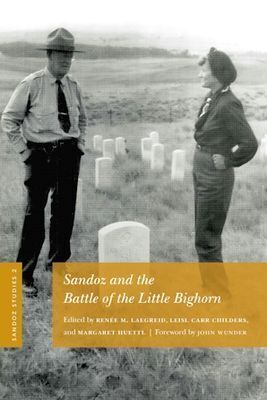
Bronze Medal Winner for the 2025 Will Rogers Medallion
Mari Sandoz’s The Battle of the Little Bighorn encouraged a change in how Americans viewed this infamous fight. By the mid-twentieth century a towering Custer myth had come to dominate the national psyche as a tale that confirmed national exceptionalism and continental destiny. Sandoz set out to dismantle this myth in an intimate account of the battle told from multiple perspectives. Although the resulting book received mixed reviews at the time, it has emerged through the decades as a visionary reinterpretation of the battle and a literary masterpiece.
Decades in the making, The Battle of the Little Bighorn was the renowned western writer’s last book, published after her death in 1966. The scholarly essays in this collection contextualize Sandoz’s work in the moment of its writing, situating her treatment of the past within the pivotal moments of her present. The essays address her incorporation of contemporary issues such as the Vietnam War, sensory history, gender study, recentering the Native perspective, environmentalism, and Sandoz’s personal challenge to completing her last book. The innovative insights into Sandoz’s perspective of the Battle of the Little Bighorn bring the historical acts involved, and her treatment of the site in which they occurred, into the twenty-first century.
- Draft by Draft: The Battle of Sandoz and Her Little Bighorn Manuscript (Elaine Marie Nelson)
- Mari Sandoz: Sensory Conjuror, and The Battle of the Little Bighorn (Cheryl A. Wells)
- "Such a Jolly Family": Mari Sandoz Rewrites Elizabeth Bacon Custer (Cathryn Halverson)
- Recentering Custer: Mari Sandoz and the Battle of the Little Bighorn (Taylor G. Hensel)
- Writing Against the Empire: Mari Sandoz and the Fog of War (Kent Blansett)
- All That We Cannot See: The Little Bighorn Battlefield Then and Now (Leisl Carr-Childers)
TO ORDER THIS BOOK VISIT https://www.nebraskapress.unl.edu/nebraska/9781496240972/sandoz-studies-volume-2/
Sandoz Studies, Volume 3: Confronting Fascism in Mari Sandoz’s Slogum House
Edited by Renée M. Laegreid; Introduction by Peter Boag
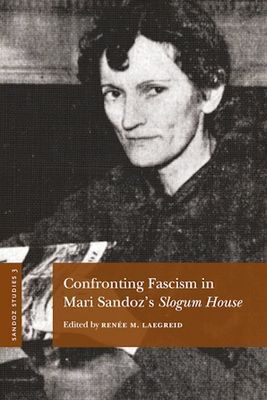
Coming Soon! Available November 2026
Available for Pre-Order Here: https://www.nebraskapress.unl.edu/nebraska/9781496249302/sandoz-studies-volume-3/
Mari Sandoz’s Slogum House shocked readers with the story of a ruthless Nebraska matriarch determined to enrich herself and her family at any cost. Sandoz drew inspiration from the rise of authoritarianism in 1930s Europe as she penned this cautionary tale of the U.S. West, paying careful attention to how inequality and the arbitrary exercise of power can cause suffering for people, land, and animals.
When first published in 1937 Slogum House faced harsh reviews: Cities and libraries banned it, politicians decried its negative portrayal of frontier life, and readers wrote to Sandoz, chastising her for coarse language and tawdry scenes. But Sandoz’s historical knowledge, coupled with her unflinching personal observations, created a work that challenged a complacent and exceptionalist narrative of the region. These multidisciplinary essays reveal how Slogum House unsettled readers and critics and continues to offer lessons for Sandoz’s time as well as our own.