-
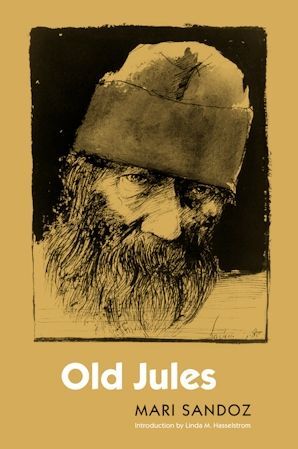
First published in 1935, Old Jules is unquestionably Mari Sandoz’s masterpiece. This portrait of her pioneer father grew out of “the silent hours of listening behind the stove or the wood box, when it was assumed, of course, that I was asleep in bed. So it was that I heard the accounts of the hunts,” Sandoz recalls. "Of the fights with the cattlemen and the sheepmen, of the tragic scarcity of women, when a man had to ‘marry anything that got off the train,’ of the droughts, the storms, the wind and isolation. But the most impressive stories were those told me by Old Jules himself.”
CLICK ON PHOTO TO ORDER BOOK
-
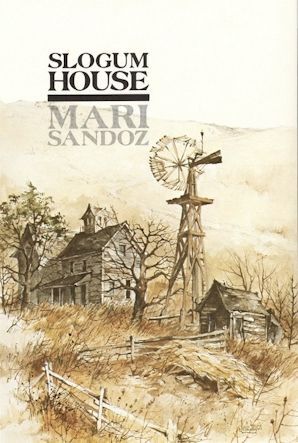
Slogum House "lay on the winter flat of Oxbow like the remains of some great, hulking animal that had foraged the region long ago, leaving its old gray carcass to dry and bleach at the foot of the hogback." Ruled by Gulla Slogum, the house was headquarters for a clan that terrorized what it couldn't seduce or steal. Using her daughter as poisoned bait and her sons as predators, Gulla plotted to put a whole county under her control. She had been insulted too often and worked too hard; now she sought power, land, and revenge.
CLICK ON PHOTO TO ORDER BOOK
-

First published in the dark days immediately before World War II, Capital City is Mari Sandoz’s angriest and most political novel. Like many important American novels of the 1930s—John Steinbeck’s The Grapes of Wrath, Jack Conroy’s The Disinherited, Robert Cantwell's Land of Plenty—Capital City depicts the troubles of working people trapped in the Great Depression. A unique portrayal of how the Depression affected the Great Plains, it examines the forces that bitterly contended for wealth and power. Sandoz researched the daily life and behind-the-scenes operations of several state capitals in the thirties before synthesizing them in this novel, which is part allegory, part indictment, part warning. Famous for her passionate writing, Sandoz imbued Capital City with the full measure of her outrage.
CLICK ON PHOTO TO ORDER BOOK
-

Crazy Horse, the legendary military leader of the Oglala Sioux whose personal power and social nonconformity contributed to his reputation as being “strange,” fought in many famous battles, including the Little Bighorn, and held out tirelessly against the U.S. government’s efforts to confine the Lakotas to reservations. Finally, in the spring of 1877 he surrendered, only to meet a violent death. More than a century later Crazy Horse continues to hold a special place in the hearts and minds of his people. Mari Sandoz offers a powerful evocation of the long-ago world and enduring spirit of Crazy Horse, The Strange Man of the Oglalas.
CLICK ON PHOTO TO ORDER BOOK
-
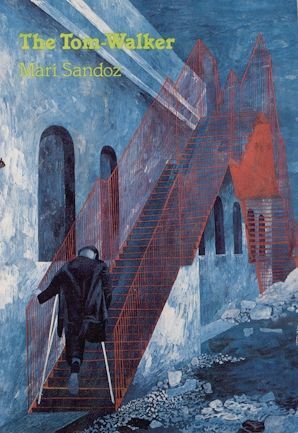
The patriarch, Milt Stone, who lost a leg fighting in Grant's army, is the Tom-Walker, circus slang for man on stilts. After the Civil War he takes his family west to the Missouri country. There he gains a reputation as a raconteur and as a passionate defender of the little man who works hard, fights the wars, and gets squeezed out by powerful interests. He lives to see his son and grandson fight in World War I and World War II, respectively, and return home from those wars, maimed like him, only to have to resume a fight just to stay alive. Crowded with living characters, The Tom-Walker never loses the larger view of American history. From the Gilded Age to the Atomic Age, everybody is "trying to be either a Jay Gould or a Jesse James, out for easy money, everybody [is] wanting to be king of something: mines, railroads, cattle, outlaws, anything." How people like the Stones fare is the story within this story.
CLICK ON PHOTO TO ORDER BOOK
-
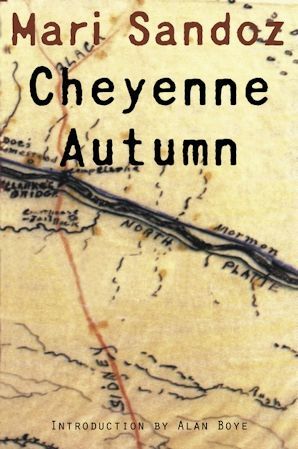
Cheyenne Autumn is a non-fiction historical account detailing the 1,500-mile 1878 exodus of the Northern Cheyenne from Oklahoma to their Yellowstone homeland. The book chronicles their desperate flight to escape harsh reservation conditions, highlighting their struggle against over 10,000 U.S. soldiers. The narrative focuses on the leadership of Dull Knife and Little Wolf as they led their people—men, women, and children—against overwhelming odds.
CLICK ON PHOTO TO ORDER BOOK
-
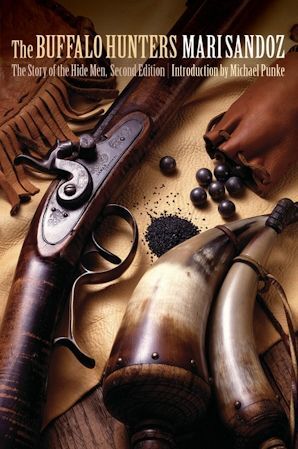
In 1867 conservative estimates put the number of buffaloes in the trans-Missouri region at fifteen million. By the end of the 1880s, that figure had dwindled to a few hundred. The destruction of the great herds is the theme of The Buffalo Hunters. Mari Sandoz’s vast canvas is charged with color and excitement—accounts of Indian ambushes, hairbreadth escapes, gambling and gunfights, military expeditions, and famous frontier characters such as Wild Bill Hickok, Lonesome Charlie Reynolds, Buffalo Bill, Sheridan, Custer, and Indian chiefs Whistler, Yellow Wolf, Spotted Tail, and Sitting Bull.
CLICK ON PHOTO TO ORDER BOOK
-

Winter Thunder is a novella based on the true story of a young teacher and her students stranded in a blizzard, highlighting human endurance and survival on the Great Plains. The story follows the group after their school bus overturns in a blinding storm, forcing them to find shelter and cope with extreme cold, hunger, and fear for days until rescue. It's known for its realistic portrayal of the harsh conditions and the resilience of the human spirit, inspired by an event that happened to the author's niece.
CLICK ON PHOTO TO ORDER BOOK
-
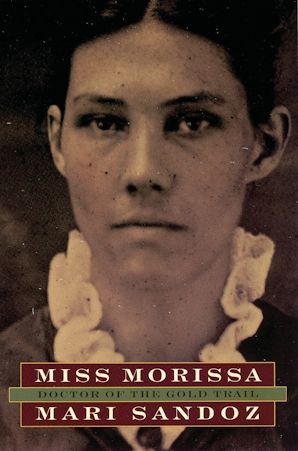
Miss Morissa is a dramatic, moving novel of a young pioneering woman doctor on the brawling Nebraska frontier of the 1870s. Fleeing the East and a heartbreaking past, Morissa Kirk finds the North Platte River Valley rife with rumors of gold strikes. Fortune hunters, desperadoes, horse thieves, murderers make up the frontier society, while Indians roam the plains refusing to surrender their land to the gold-hungry white men. Near lawless Clarke Bridge she sets up her practice, treating white and Indian alike, receiving horses (if anything) in return for her services. Then, even as fame spreads of her skill, and acceptance slowly grows, Morissa becomes embroiled in the life-and-death struggle between the cattlemen and the homesteaders, a struggle as destructive as it was inevitable. In the telling of Morissa's story, Mari Sandoz has caught the whole turmoil of the changing frontier in the days of Custer, Calamity Jane, and Buffalo Bill Cody.
CLICK ON PHOTO TO ORDER BOOK
-
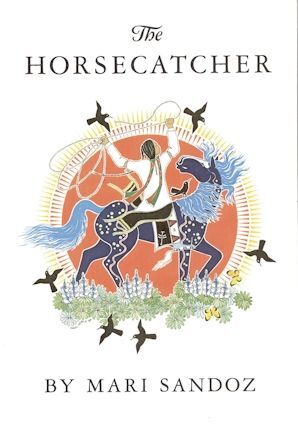
Praised for swift action and beauty of language, The Horsecatcher is Mari Sandoz's first novel about the Indians she knew so well. Without ever leaving the world of a Cheyenne tribe in the 1830s, she creates a youthful protagonist many readers will recognize in themselves. Young Elk is expected to be a warrior, but killing even an enemy sickens him. He would rather catch and tame the mustangs that run in herds. Sandoz makes it clear that his determination to be a horsecatcher will require a moral and physical courage equal to that of any warrior. And if he must earn the right to live as he wishes, he must also draw closer to family and community.
CLICK ON PHOTO TO ORDER BOOK
-
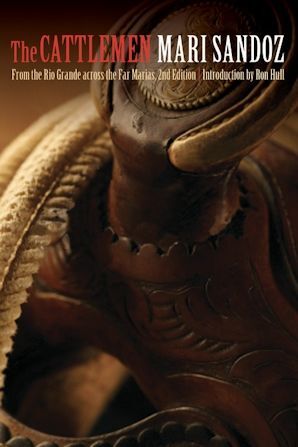
The Cattlemen is the story of the cattle industry in America and of the men whose ranches reached from the Rio Grande into Montana, from the early Spanish days to Mari Sandoz’s contemporary times. It is the second in Sandoz’s trilogy of books narrating the history of the American West in relation to animal species.
CLICK ON PHOTO TO ORDER BOOK
-
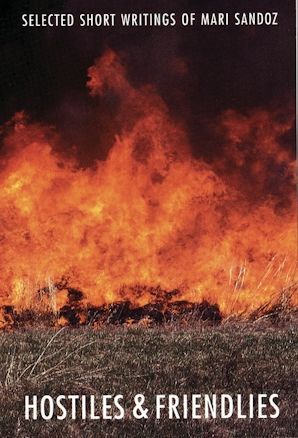
Hostiles and Friendlies: Selected Short Writings of Mari Sandoz is a one volume book with Mari Sandoz's reminiscences of life in the Sandhills country; a study of the two Sitting Bulls (the Hunkpapa and the Oglala) and other Indian pieces; a novelette, Bone Joe and the Smokin' Woman; and nine short stories, mostly with a rural setting, including The Vine," her first to be published. Introduced by an autobiographical sketch of the author's early years and linked by a commentary derived from her letters, articles, and interviews, the separate pieces coalesce into an illuminating picture both of the Niobrara River country and of Mari Sandoz's emergence as a major American writer.
CLICK ON PHOTO TO ORDER BOOK
-
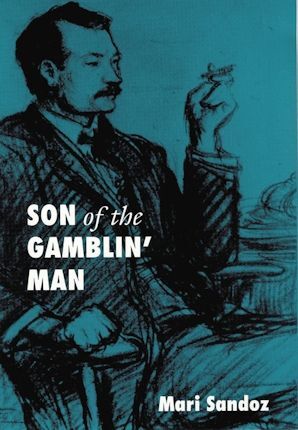
Son of the Gamblin’ Man tells of the gambler and townsite promoter, John Cozad, who founded Cozad, Nebraska, and of his family, particularly his younger son, who became a world-famous artist and teacher known as Robert Henri. This tale is essentially Robert's story, the story of a sensitive talented boy growing up in the midst of frontier violence. But it is also the story of the ambitious promoter and of frontier people fighting hunger, cold, blizzards, drouths, grasshoppers, prairie fires, and ruthless cattlemen. This is an important resource for those wanting to know about Robert Henri's Nebraska roots. It is one of our best-selling books and visitors often buy it and The Art Spirit.
CLICK ON PHOTO TO ORDER BOOK
-
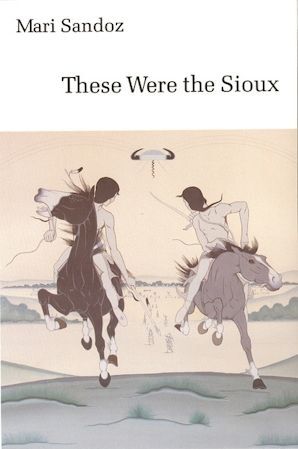
"The Sioux Indians came into my life before I had any preconceived notions about them," writes Mari Sandoz about the visitors to her family homestead in the Sandhills of Nebraska when she was a child. These Were the Sioux (1961) takes the reader far inside a world of rituals surrounding puberty, courtship, and marriage, as well as the hunt and the battle.
CLICK ON PHOTO TO ORDER BOOK
-

Love Song to the Plains is a lyric salute to the earth and sky and people who made the history of the Great Plains by the region's incomparable historian, Mari Sandoz. It is a story of men and women of many hues—courageous, violent, indomitable, foolish—their legends, failures, and achievements: of explorers and fur trappers and missionaries; of soldiers and army posts and Indian fighting; of California-bound emigrants who stopped off to become settlers; of cattlemen and bad men, boomers and land speculators, and their feuds and rivalries. Above all, this is a portrait of the true Plainsman, the man or woman who can stand to have the horizon far off and every day, every year, a gamble.
CLICK ON PHOTO TO ORDER BOOK
-
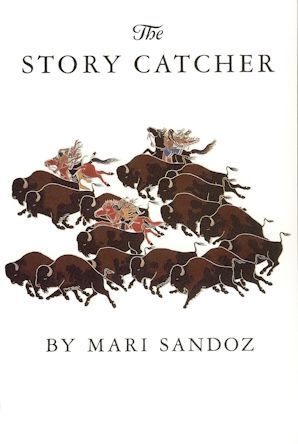
Rooted in legend, history, and empathetic understanding, The Story Catcher, Sandoz's last novel, won the Levi Strauss Golden Saddleman Award and the Western Writers of America Spur Award. Young Lance is his father's son when it comes to the daring needed for gaining honors in the war councils of the plains Sioux. Even greater is his seeing medicine. With eyes growing sharper, he watches the warring between tribes, the buffalo hunting, the daily routine—and shows it all in pictures drawn in the dust or on skins with charcoal and color sticks. But catching the story of Sioux society in the 1840s is not for an impetuous and unseasoned youth. Many adventures, sorrows, and hardships must pass before the village sings Lance's new name: Story Catcher, recorder of the history of his people.
CLICK ON PHOTO TO ORDER BOOK
-
Covering more than two centuries, The Beaver Men recounts the beginning of the beaver trade along the St. Lawrence to the last great rendezvous of traders and trappers on Ham’s Fork, in what is now Wyoming, in 1834. The Beaver Men is the third in Mari Sandoz’s trilogy of books narrating the history of the American West in relation to an animal species.
CLICK ON PHOTO TO ORDER BOOK
-
By zealous research, keen observation, and wide-ranging and deeply probing commentary, Mari Sandoz has become one of the most famous and well-respected interpreters of the American West. Old Jules Country (1965) is made up of the region that Sandoz has written about most frequently—the High Plains of the Dakotas, Montana, Nebraska, and Wyoming—the Black Hills, the Bad Lands, the sandhills, and the great rivers: the Missouri, the Platte, and the Yellowstone. Here are selections from the six volumes of her acclaimed Great Plains Series The Beaver Men, Crazy Horse, Cheyenne Autumn, The Buffalo Hunters, The Cattlemen, and Old Jules and from her study of a great people, These Were the Sioux. Also included are two essays, "The Lost Sitting Bull" and "The Homestead in Perspective." A Cheyenne prayer and two sketches unavailable elsewhere—"Snakes" and "Coyotes and Eagles"—complete the collection. This anthology provides a stimulating sampling for readers not yet acquainted with Sandoz's work. For her extensive following, it offers the opportunity for a satisfying reappraisal of her overall achievement.
CLICK ON PHOTO TO ORDER BOOK
-
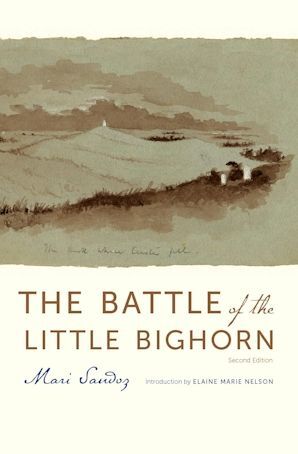
Mari Sandoz’s beautifully written account of the battle in which General George Armstrong Custer staked his life—and lost it—reveals on every page the author’s intimate knowledge of her subject. The character of the Sioux, the personality of Custer, the mixed emotions of Custer’s men, the plains landscape—all emerge with such clarity that the reader is transported to that spring in 1876 when the Army of the Plains began its fateful march toward Yellowstone. The background of the tragedy is here: the history of bad blood and broken treaties between the Indigenous nations and the United States, the underlying reason for Custer’s expedition and for the convocation of Indians on the Little Bighorn that particular year. Sandoz’s final book was the first analysis of Custer’s motives and political ambitions to shed light on an old mystery that was hotly disputed by the general’s admirers. In the most recent edition of this book, historian Elaine Marie Nelson introduces this iconic work to a new generation and details the long, challenging road this book took to publication. Sandoz raced against time to complete the volume while undergoing cancer treatments, and the book was published just three months after her death. The Battle of the Little Bighorn is widely considered the apex of her writing.
CLICK ON PHOTO TO ORDER BOOK
-

Charmingly, Mari Sandoz tells of a long-ago Christmas in western Nebraska when her father’s house was filled with good music. Old Jules had ordered an Edison phonograph and boxes of cylinder records from the East, paying for them with an inheritance and ignoring debts, to the chagrin of his long-suffering wife. But the entire family soon entered into the holiday spirit as neighbors arrived to feast and dance and enjoy musical selections ranging from Lucia di Lammermoor to Casey at the Telephone. Even old enmities dissolved under the spell, for, as Old Jules said, “The music is for everybody.” A classic in the tradition of Dylan Thomas’s Child’s Christmas in Wales and Truman Capote’s Christmas Memory, The Christmas of the Phonograph Records was first published posthumously in December 1966.
CLICK ON PHOTO TO ORDER BOOK
-
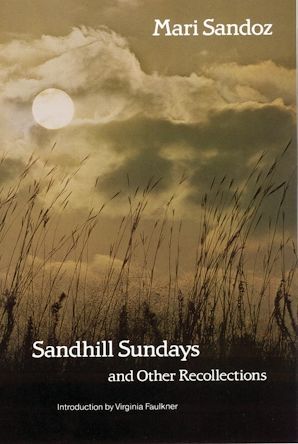
The proof of that is in her powerful re-creation of pioneer days in the Sandhills of northwestern Nebraska in these autobiographical pieces written between 1929 and 1965. Those who have not read her classic Old Jules will find Sandhill Sundays and Other Recollections a colorful introduction to Sandoz Country, and those who have will look for the same landmarks and unforgettable people. They include the Sandoz patriarch, the fiery libertarian Old Jules; Marlizzie, the archetypal pioneer woman who was Mari's mother; siblings, chums, neighbors, homesteaders, and Indians, all individualized and defined by a harsh and lonely frontier. Dangers in every form—blizzards, fires, rattlesnakes, murderous men—are described, and, just as vividly, so are the pleasures afforded by country cooking, storytelling, pet animals, and the first phonograph for miles around. Even when she strays, as in the final piece, "Outpost in New York," Mari Sandoz never leaves the Sandhills in spirit.
CLICK ON PHOTO TO ORDER BOOK
-
Published posthumously, Sandoz’s Foal of Heaven (written in 1954) was inspired by her month-long annual summer visits in the 1940’s to the Lazy VV horse farm near Nederland, Colorado, owned by Lynn and Rose Van Vleet.
IF YOU WOULD LIKE TO ORDER THIS BOOK, PLEASE CONTACT THE MARI SANDOZ SOCIETY info@marisandozsociety.org