Thursday, September 17, 2026 at 7:30pm Mountain Time
Chadron State College Student Center Ballroom
To Preserve Unimpaired: The Evolving Nature of the National Park Service
This presentation takes its cue from the 1916 mandate that created the National Park Service: to preserve resources “unimpaired” while also making them available for public use. It argues that this dual charge has produced a lasting tension at the center of the agency’s work. Beyond the NPS's well-known natural parks, the talk examines how infrastructure, historic preservation, and interpretation shape what visitors see and how they understand nature and the American past. From roads and visitor centers to cultural resource management, the NPS has actively constructed landscapes and histories in both the “crown jewels” of the system and unexpected places.
More than a century after its founding, the National Park Service remains central to American public life. In a deeply divided political moment, the agency manages a shared civic institution where millions encounter the nation’s natural and cultural landscapes. Yet the meanings attached to nature and history have never remained fixed. As the NPS has evolved, so too has the meaning of “unimpaired.”
Dr. Peter Kopp, 2026 Pilster Lecturer
Associate Professor of History and Co-Director of the Public History and Museum Studies Program at the University of Colorado Denver
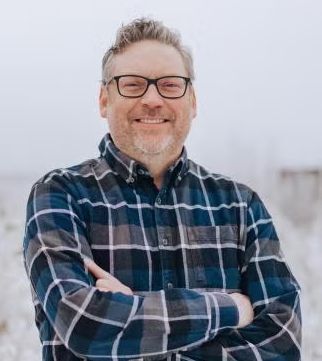
Dr. Kopp is a public historian of the North American West with specialties in the history of agriculture and the environment. He is the author of Hoptopia: A World of Agriculture and Beer in Oregon’s Willamette Valley and the forthcoming Chile Pepper King: Fabián García and the Botanical Transformation of the Borderlands. His work explores the intersections of landscapes, agriculture, tourism, and public memory in the American West. His book, Hoptopia: A World of Agriculture and Beer in Oregon’s Willamette Valley (University of California Press, 2016) won the American Historical Association’s Pacific Coast Branch Book Award for first time authors (2017). Dr. Kopp has also written articles and developed public history projects on tourism and the National Park Service, the built environment of the Southwest borderlands, and the “green” activism of the Grateful Dead. Kopp earned his Ph.D. from the University of Nevada in 2012 and served as the Director of Public History at New Mexico State University from 2012-2019.
About the Pilster Great Plains Lecture
The Pilster Great Plains Lecture Series, hosted annually by the Mari Sandoz Society and Chadron State College, brings nationally renowned speakers and writers to Nebraska to explore the history, culture, and environment of the Great Plains. Funded by the Esther and Raleigh Pilster Fund, the free public events often highlight topics like regional immigration, politics, the flora and fauna of the Great Plains, Western and Native American history, as well as the literary legacy of author Mari Sandoz.
In 2006, the late Esther Pilster gave a gift of ranchland in northwest Nebraska near Whitney in Dawes County, to the Mari Sandoz Society. The gift established an endowment with the Mari Sandoz Society as a tribute to her late husband Raleigh, who grew up on the ranch, and his parents John and Grace Pilster. As a beloved teacher and school administrator for 44-years, Esther served 29-years as principal at Boyd Elementary School in Omaha. Esther wanted her gift to honor the courage and tenacity shown by Raleigh’s parents and others who lived on the Great Plains. The Pilster Great Plains Lecture Series and other programs of the Society are in part, funded by the Pilster endowment.